
Searching the Assumption Parish Court Docket
Start most Assumption Parish district searches through the Assumption Parish Clerk record-search route. The route hands off to the Cott/eSearch service. Before anything else, figure out where the case lives. Is it in the Twenty-Third Judicial District Court? Maybe a ward justice of the peace or Napoleonville Mayor's Court? Federal cases are a separate world entirely. Guessing a case type matters far less than picking the right court. The Assumption Parish clerk keeps the parish-side district records. The lower courts hold their own files.
The Cott landing lists separate coverage windows for civil, criminal, and probate material. Its search screen sits behind an account. Field labels are not public before login. Have the court name, case number if known, party name, and approximate filing date in hand. An Assumption Parish result deserves a check against the portal's Certified Dates information. A missing result, in other words, is not proof that no record exists.
- Read the citation, notice, or prior court paper to identify the court and any division.
- Open the Assumption Clerk route and review the Cott coverage dates for the needed record type.
- Create an account or sign in, then use the name or case fields the protected module displays.
- Read the index or docket history for the latest entry, court, division, and document availability.
- Confirm an important setting or request a certified document from the Assumption Parish Clerk of Court.
Note: A case can sit with a justice of the peace or Mayor's Court even when the Assumption Parish clerk portal shows no matching district record.
Assumption Parish Cott Docket Access
Think of the Assumption Parish Cott/eSearch host as a paid index-and-image service. It is not an open case-by-name calendar. Its public landing identifies Civil, Criminal, Probate, and indexed records, along with account controls and Certified Dates. Civil indexes and images run from 1996 forward. Criminal indexes go back to 1994, though criminal images are not offered through that parish landing. Probate indexes and images begin in 1979. Those gaps make the clerk counter the real resource for older Assumption Parish files.
The Assumption Clerk home page describes the office's records role and its public computers. Walk-in access helps when an account will not work. It also helps when an older record needs staff direction.
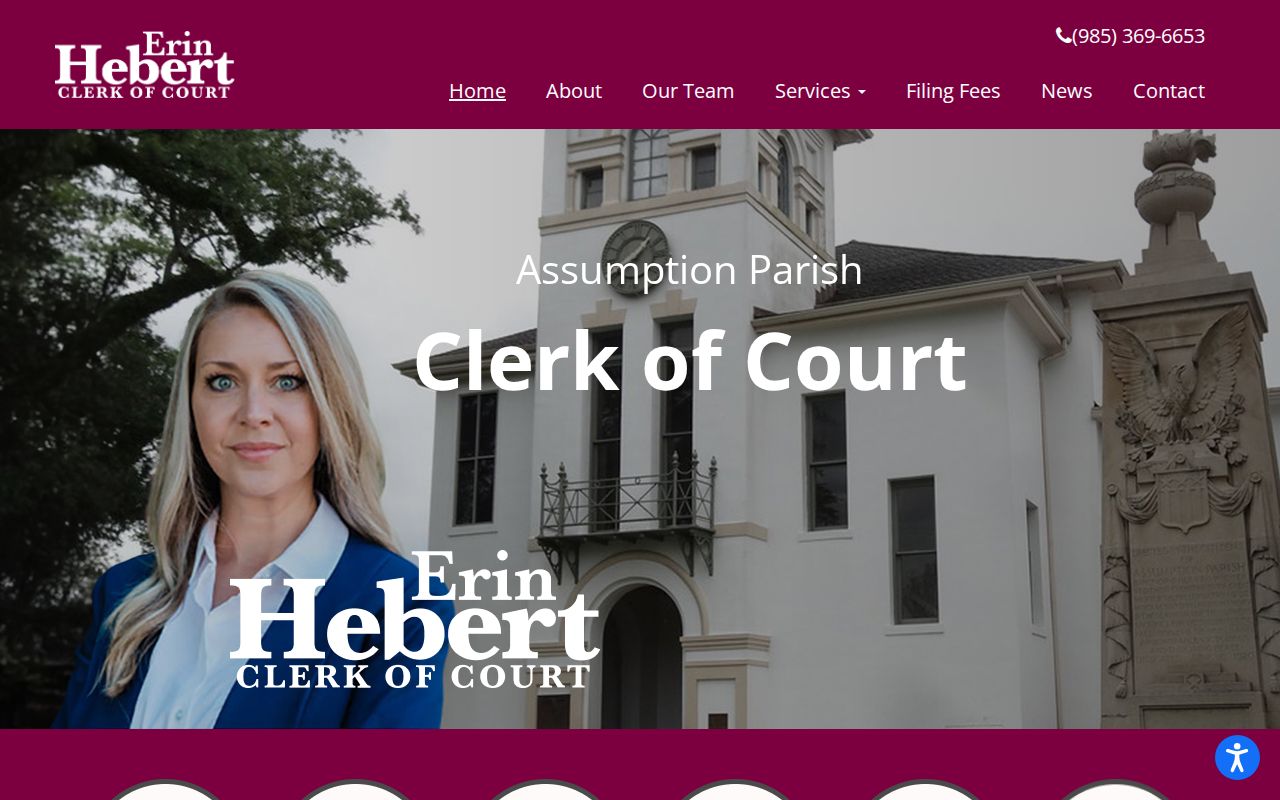
A public computer does not turn an index printout into a certified copy. Still, it gives Assumption residents a local path into the same court-record system the clerk runs.
| Access period | Published cost | What to remember |
|---|---|---|
| 24 hours | $20 | Unlimited listed index and available-image access. |
| 30 days | $50 | Use Certified Dates before a broad Assumption Parish search. |
| 6 months or 1 year | $300 or $500 | Criminal images remain unavailable on the parish landing. |
Inside a Assumption Parish Court Docket
An Assumption Parish court docket is the chronological case record. It is not just a list of names. Where the system exposes details, look at the header. It may show a case number, court, division, filing date, caption, status, and assigned judge. The history goes deeper. It can reveal pleadings, service, motions, orders, minute entries, hearing settings, continuances, judgments, and appeals. Criminal and civil entries use different party roles. Read both kinds of records from the oldest filed event toward the newest operative entry.
Assumption Parish publishes no official local case-number pattern on the Cott landing. Copy the punctuation and number exactly as printed on the citation, court notice, clerk record, or authenticated result. Do not invent a prefix. A later entry can change what an earlier one means. A continuance, for example, means the most recent valid setting must be confirmed.
| Case number | The clerk's unique identifier; copy it exactly from the authenticated Assumption Parish result or court paper. |
|---|---|
| Caption and parties | Names the civil parties or the prosecuting authority and defendant in a criminal case. |
| History | Shows filings, orders, minute entries, motions, and other dated court actions. |
| Setting | May identify a hearing date, division, courtroom, or purpose when the record exposes it. |
| Disposition | Records an outcome such as judgment, dismissal, plea, acquittal, or other final action. |
| Documents | Civil and probate images can be available in Cott; criminal images are not advertised there. |
Assumption Parish Docket Image Limits
A common Assumption Parish search mistake is reading a missing image as a missing case. The parish service says civil and probate images are available within their published date windows. Its criminal line states it plainly. Images are not available. A criminal index result can still supply a case number. It can also open a route to the clerk's file. Flip it around and a visible civil image still is not a clerk-certified judgment. The Assumption Parish clerk remains the source for a certified copy.
The eClerks parish-search instructions describe a second remote-access path through Louisiana Clerks' Remote Access Authority. You select a parish and purchase the subscription you want. eClerks can help reach parish indexes. It also offers statewide criminal-search functions. It does not replace the Assumption Parish custodian or make every filed document publicly viewable.
- Index
- A searchable reference to a case or recorded event, often less complete than the physical file.
- Certified Dates
- The service's stated through-date for an index, useful before treating a recent Assumption Parish filing as absent.
- Certified copy
- A clerk-certified official copy that differs from a screen view or a printed portal page.
Courts That Keep Dockets in Assumption Parish
Assumption Parish works under a tri-parish district arrangement. It is not a single-county trial court. The Twenty-Third Judicial District Court holds original civil and criminal jurisdiction. Its reach covers Assumption, Ascension, and St. James Parishes. The Assumption Parish Clerk of Court keeps the Assumption-side district file. Three ward justice of the peace courts keep their own limited-jurisdiction records. Napoleonville Mayor's Court handles village ordinance matters. Federal cases sit outside the Assumption Parish clerk system entirely.
The overview shows how the courts fit together. Louisiana's judicial-branch overview places district courts, courts of appeal, and the Supreme Court within the state hierarchy.
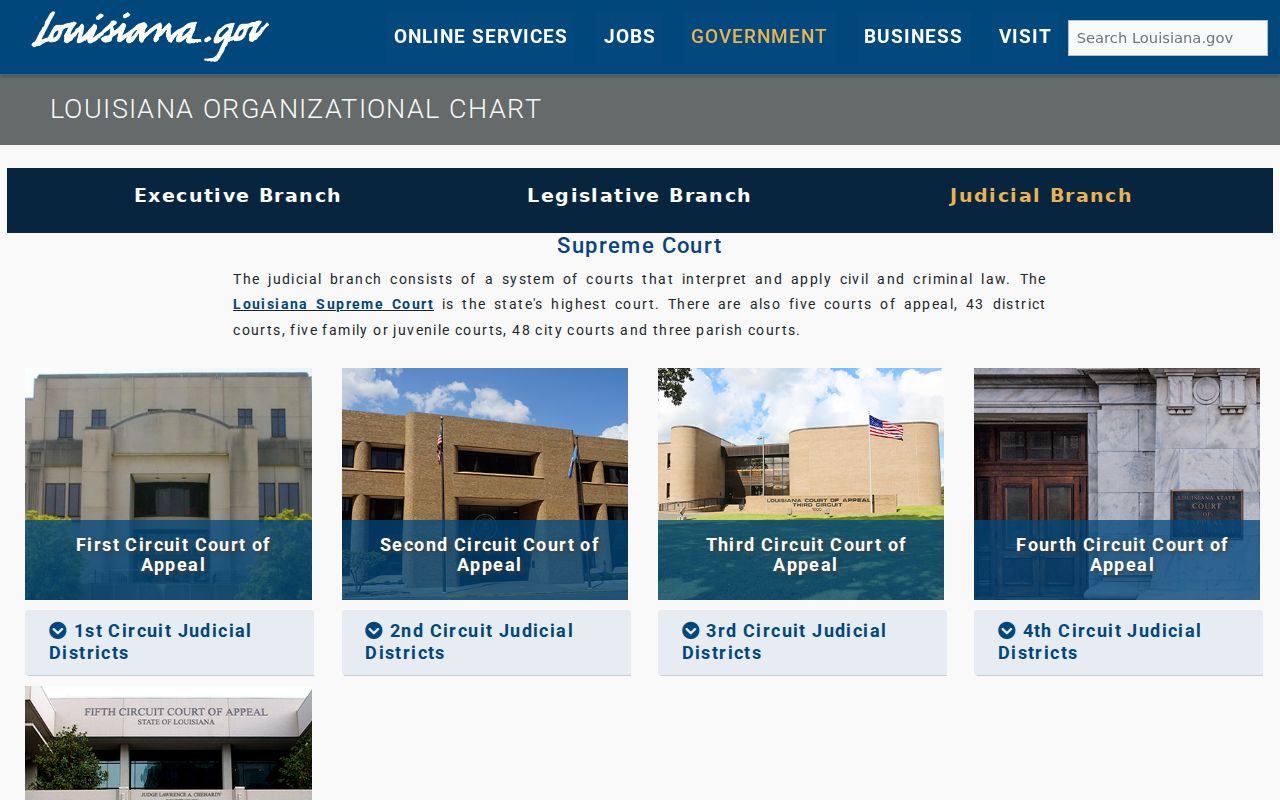
The statewide hierarchy helps you tell an Assumption Parish trial record from an appeal, which normally receives its own appellate docket. The Louisiana Judiciary Assumption parish profile confirms the local district and First Circuit relationship.
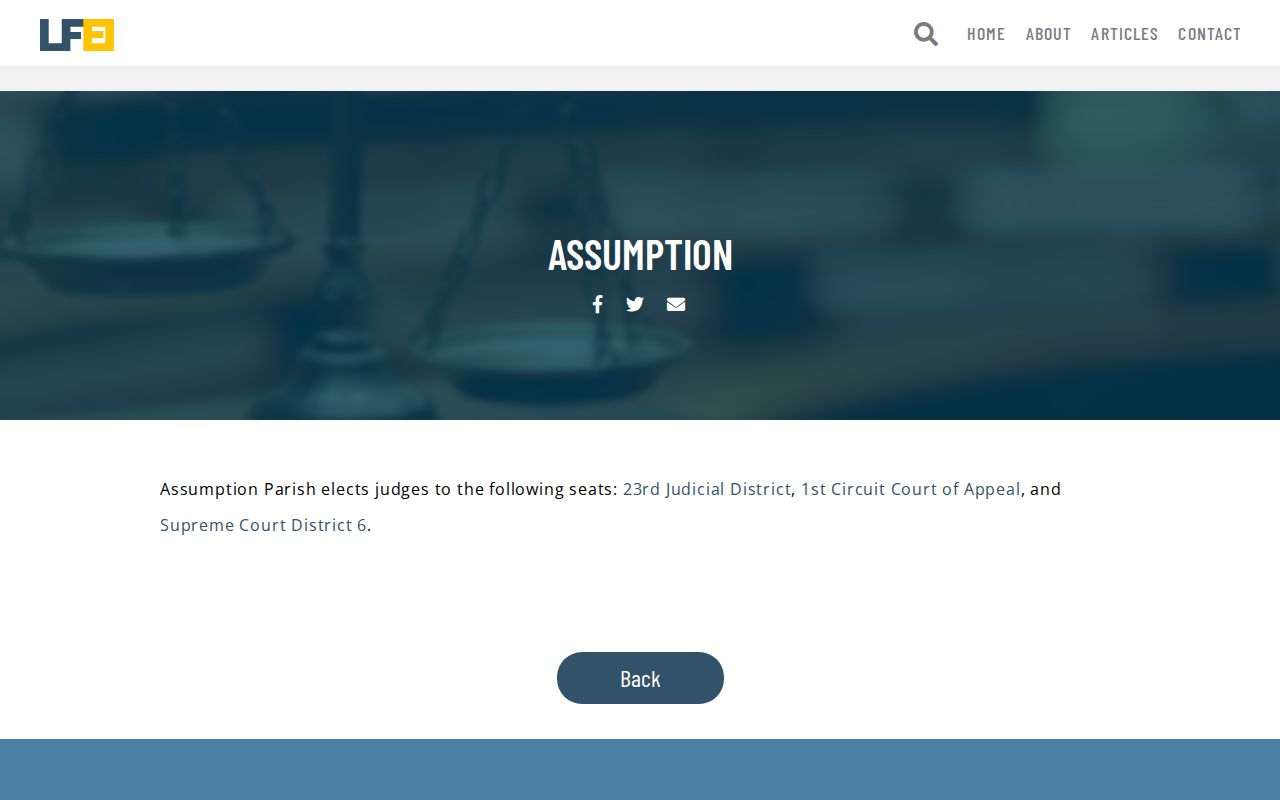
Use the Assumption Parish judicial listing as a routing reference. The clerk or the relevant lower court supplies the actual case file.
| Court or custodian | Docket covers | Where to begin |
|---|---|---|
| Twenty-Third JDC / Assumption Clerk | District civil, criminal, family, probate, and allotted traffic matters | Assumption Clerk Cott/eSearch, public computer, or clerk counter |
| Ward 1, 2, or 3 Justice of the Peace | Limited civil matters and committing-magistrate functions | Contact the responsible ward office |
| Napoleonville Mayor's Court | Village ordinance violations | Confirm the citation and contact City Hall |
| Eastern District of Louisiana | Federal civil, criminal, and bankruptcy matters | PACER/CM-ECF and the federal clerk |
Assumption Parish Justice Docket Paths
Do not let an Assumption Parish search end at the district clerk. There are three justice of the peace wards. Ward 1, Ward 2, and Ward 3 each keep their own files. Each ward keeps separate records. The parish justice-of-the-peace directory lists the ward judges, precinct coverage, addresses, and telephone numbers. A limited civil case belongs with the ward that has authority over it. Succession and probate matters never belong in a justice court.
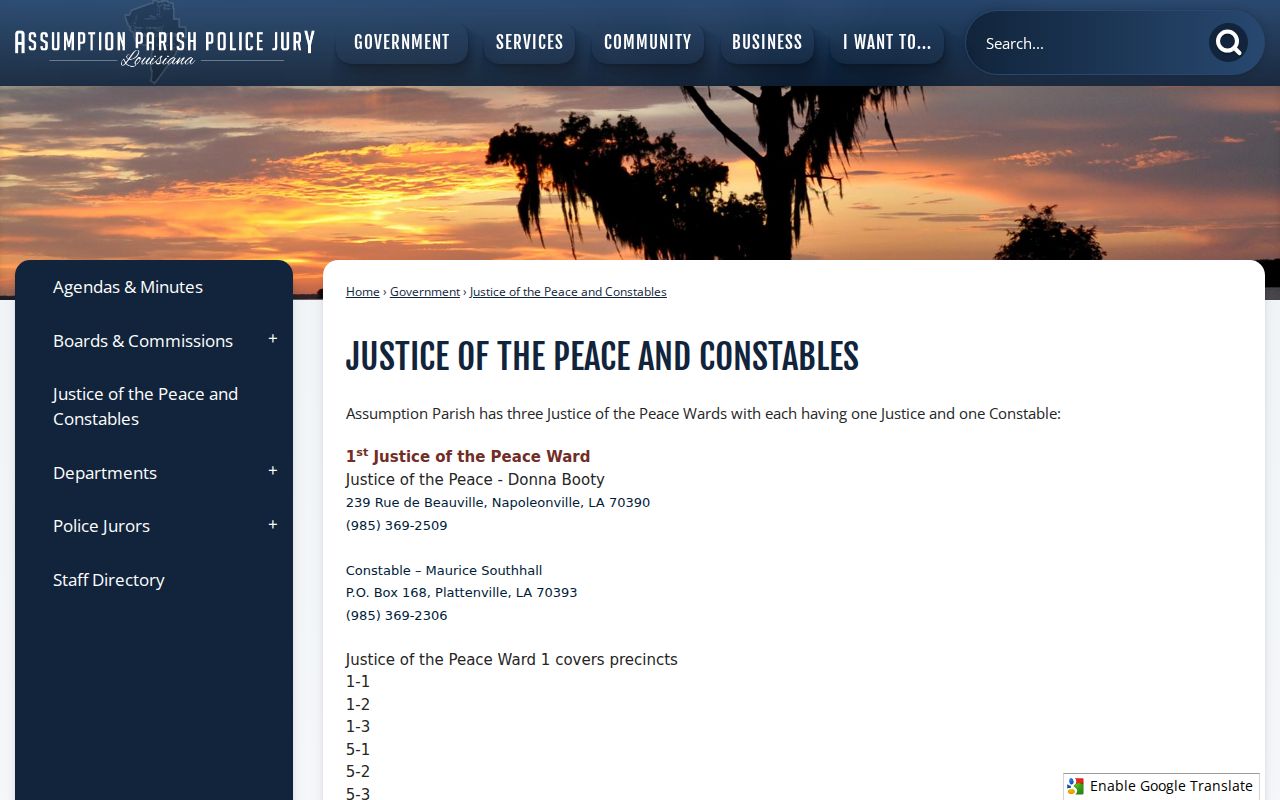
A citation or court paper may name a justice of the peace. That is not the Twenty-Third Judicial District Court. The Assumption Parish ward listing then gives you the local contact path.
Napoleonville Mayor's Court runs on a separate track. State law allows a mayor's court for municipal-ordinance cases. The village publishes no online docket portal, though. Let the court line on the citation decide your next call. One more wrinkle exists. A district appeal, or an appeal from justice court, can open a later Assumption Parish docket. It gets a new case number of its own.
How to Find Court Dates and Settings
The Twenty-Third Judicial District Court posts a duty calendar, holiday material, division pages, and remote-hearing details. What it does not post is a public Assumption Parish calendar searchable by case name. The duty calendar is labeled for official use. It shows duty-judge coverage, not full hearings. So begin with your latest citation, summons, notice, or an authenticated docket entry. Then have the responsible office confirm the setting.
Dates can shift, too. An old Assumption Parish date may sit in the case history after a reset. A new notice or later minute entry can change what actually governs. The full route for calling the clerk, reading setting fields, and handling a missed setting is laid out on the Assumption Parish court dates page.
For remote hearings, rely on the meeting details in the court's invitation. The court's Zoom material works through an app, a browser, or a telephone. No public meeting directory exists. A current Assumption Parish setting should come only from the notice, the clerk, or the assigned division.
Assumption Parish Docket Division Contacts
Six elected divisions, A through F, serve the Twenty-Third Judicial District Court. Two hearing officers serve it as well. The court runs a three-parish system. If an Assumption Parish docket shows a division, a setting question can go straight to that division's court contact. No division listed? The Assumption Parish Clerk of Court can help identify the record path. The district judges' office also lists a separate public telephone route. Use it for confirming divisions and settings.
The Twenty-Third Judicial District Court home page is the official gateway. It covers division pages, calendars, court services, and courthouse information.
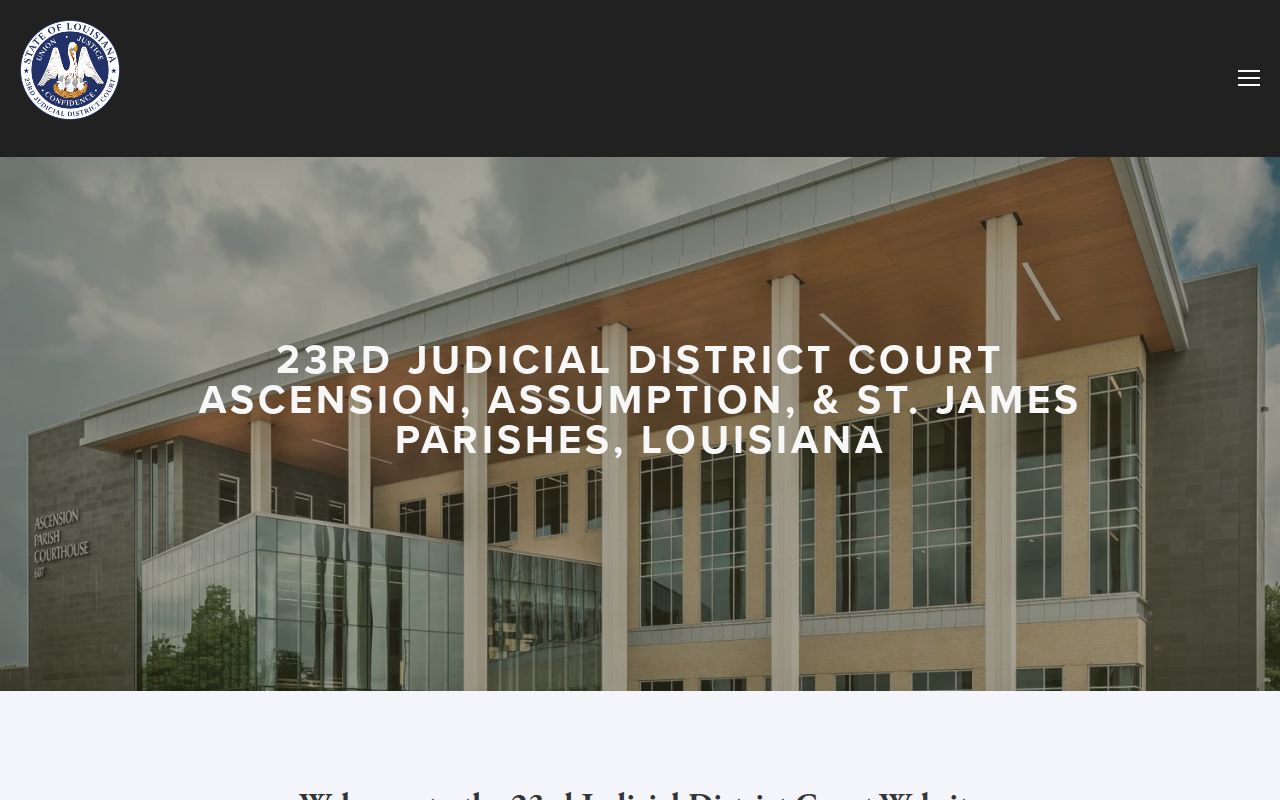
The Assumption Parish district page is not a name-search portal. It works best with the Assumption case number, the assigned division, or a court paper in hand. Any one of those narrows the search.
Division F plays a special date-based role. Under the 2025 district rule, family matters filed after December 31, 2024 go to Division F. Older family matters stay in their original divisions. A transfer or consolidation rule can still move them.
Assumption Parish 2024 Docket Filings
The Louisiana Supreme Court's 2024 annual report counts 2,628 Assumption Parish filings on the Twenty-Third Judicial District line. Traffic drives much of that workload. That detail matters for any docket search, because a lookup focused only on civil images can miss the practical route to a traffic or criminal record, especially when a citation names a division.
Keep in mind these numbers cover Assumption Parish alone, not the whole tri-parish district. The report also lists 57 juvenile filings. Treat those as off-limits for ordinary public-name searching, since Louisiana law restricts juvenile access.
Public Access to Court Dockets
Louisiana access rules govern Assumption Parish court records. Public access has real limits. The Assumption Parish Clerk of Court is the legal custodian for district records in the parish. That office can issue a certified copy where the rules allow it. Online access varies by record type. A sealed, expunged, or juvenile matter may be missing or restricted. Some are open only to an authorized person. Redaction rules add another layer, shielding personal identifiers inside electronic filings.
Key Louisiana rules:
Code of Civil Procedure art. 251 allows public examination and copying from the clerk unless another law limits access, and it authorizes certified copies.
Public Records Law R.S. 44:31 generally gives an adult the right to inspect or copy public records while placing the burden of an exception on the custodian.
Code of Civil Procedure art. 14.1 recognizes an accepted electronic filing as an official record and requires specified identifiers to be omitted or redacted.
Children's Code art. 412 makes juvenile records confidential except for the disclosures the statute permits.
Note: A public Assumption Parish docket is only a reference to court activity. Verify important dates, outcomes, and copy types with the original custodian before relying on them.
Assumption Parish Restricted Court Dockets
A search that returns nothing is not the end of the story. First confirm the court and the portal's coverage dates. Civil results may fall outside the 1996 online window. Criminal results may fall outside the 1994 window. A justice-court or Mayor's Court record may never have belonged in the parish portal at all. A missing criminal image reflects a Cott limitation. It is not proof that no official file exists.
Juvenile matters are generally confidential under Children's Code article 412. Expunged records are confidential under Code of Criminal Procedure art. 973. Family, adoption, protected-order, financial, and sealed material can carry limits as well. The right Assumption Parish move is to ask the clerk which access category applies. Never work around a restriction.
Docket Records at the Clerk's Office
The Assumption Parish Clerk of Court keeps the parish-side Twenty-Third Judicial District Court record for civil, criminal, family, succession, probate, and district traffic matters. The clerk's Cott portal is one access channel among several. The others are simple. They include the physical office, telephone, mail route, public computer, and the statewide eClerks layer. When requesting a judgment, order, or docket history, have the case number ready. Then give the court or division, the document type, and whether you need a certified copy.
The Assumption Clerk's official About page covers the office's public-record role. It also describes the historic courthouse setting.

For a certified record, or for any file the online index does not display, the Assumption Parish clerk counter remains the authoritative route.
Assumption Parish Clerk of Court
4809 Highway 1
Napoleonville, LA 70390
(985) 369-6653
Monday through Friday, 8:30 a.m. to 4:30 p.m.
Certified documents cost $6 each on the published civil fee schedule. Paper exhibits, attachments, transcripts, and depositions run $2 per page. Ask the clerk to confirm the current Assumption Parish copy, mailing, or exemplification charge before you file a docket request.
Assumption Parish Courthouse Docket Access
Assumption Parish keeps its court records in one courthouse that bridges centuries. The clerk traces holdings back to the 1700s. Online, the civil and criminal dockets only reach recent decades. The building itself dates to 1896. Its Italian Villa design earned a spot on the National Register of Historic Places in 1997. Older Assumption Parish cases are different. The clerk's counter is usually where the search starts. The local jury information page gives the clearest public notice of courtroom rules at the Assumption courthouse.
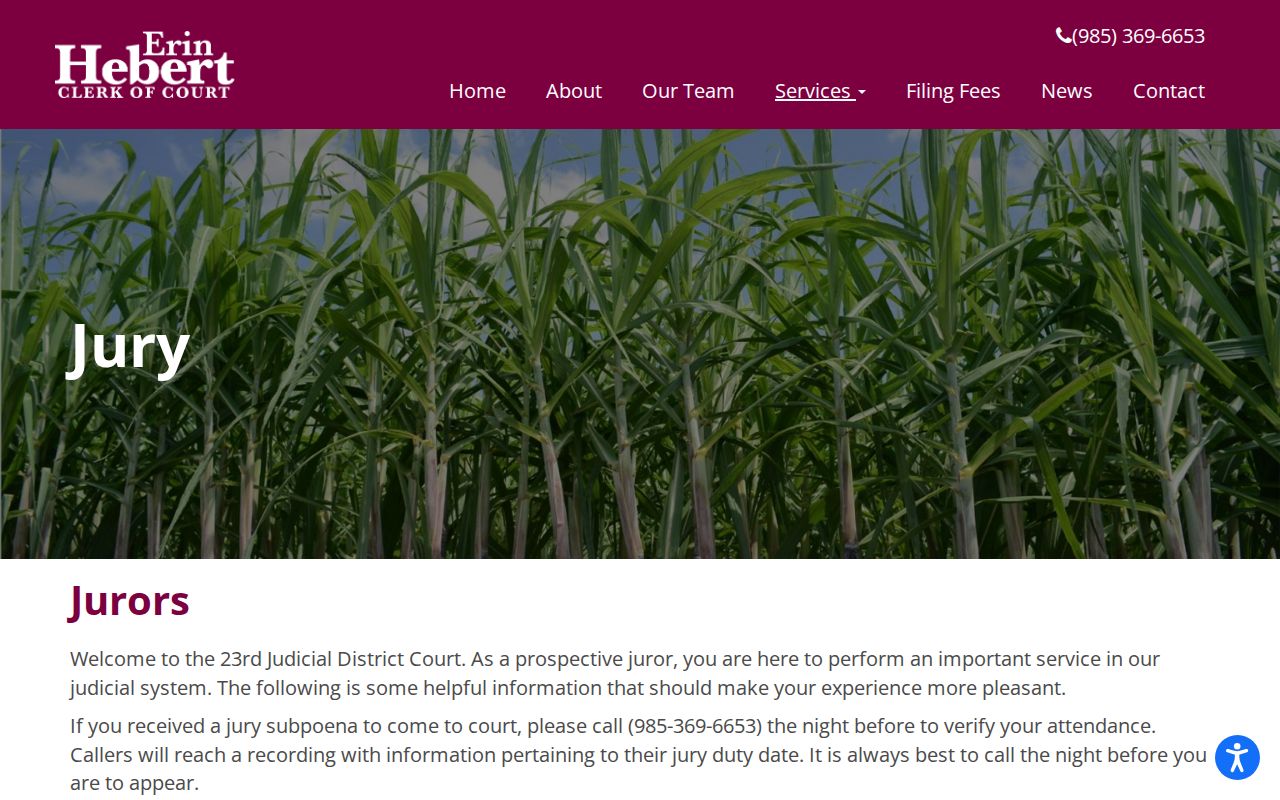
That notice bars cell phones, tablets, and purses from the courtroom. It also sets clothing rules for jurors. Counter procedures may differ, so ask staff before hauling papers in for a docket request.
Assumption Parish Court Dockets by City
Napoleonville is the only incorporated place in Assumption Parish. It gets the lone city-level docket route. Its Mayor's Court handles municipal-ordinance matters. State traffic citations, however, may land in the Twenty-Third Judicial District Court. Belle Rose, Labadieville, Paincourtville, Pierre Part, and Supreme are census-designated places rather than cities. No separate pages exist for them. The court printed on your citation is still the safest routing detail in Assumption Parish. The Census incorporated-place table lists Napoleonville's 2020 population.
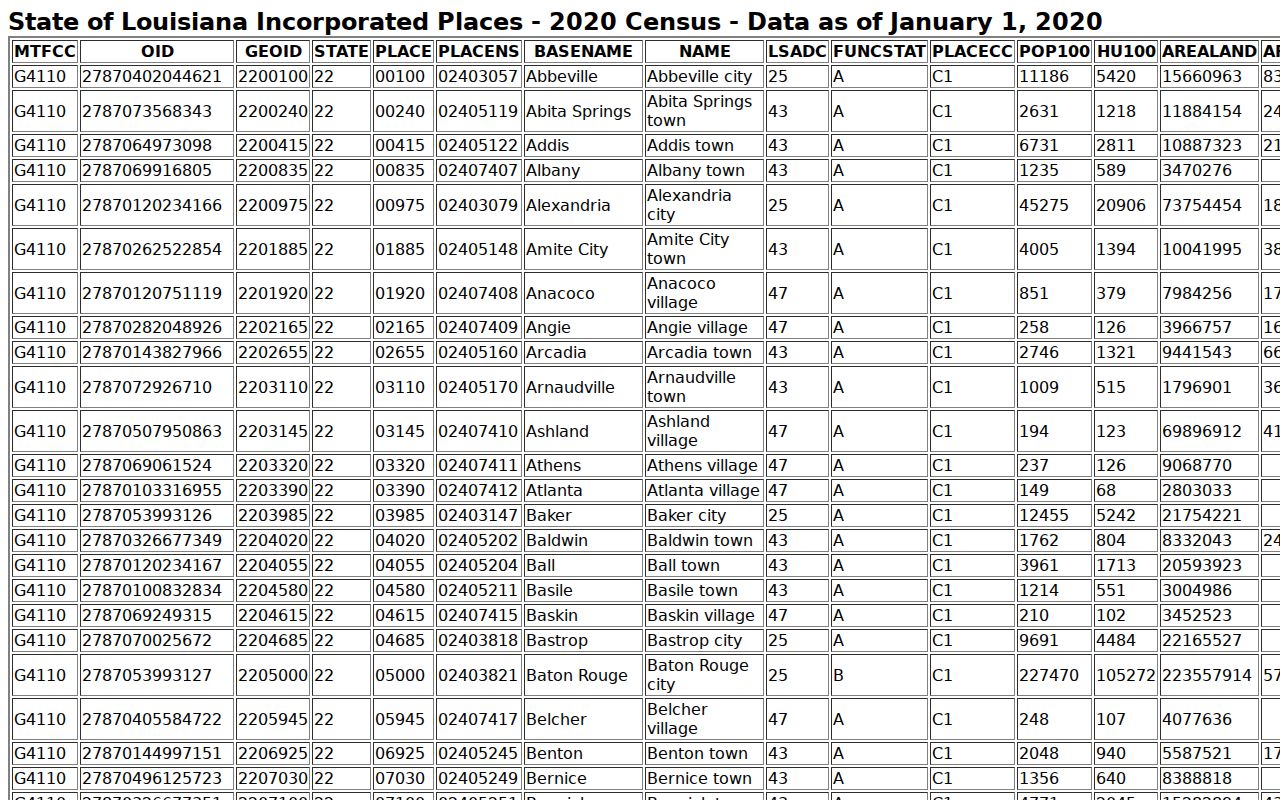
Start any Assumption Parish city search with your citation or court notice. Napoleonville posts no official online docket or payment portal, so the paper itself is your best guide.
Napoleonville Docket Search
2020 Census population 540 · Mayor's Court ordinance route and parish-court fallback.
Map and Directions to the Assumption Parish Courthouse
Twenty-Third Judicial District Court filings for Assumption Parish, along with the Clerk of Court's civil, criminal, family, succession, and probate records, are kept at the historic Assumption Parish Courthouse in Napoleonville. The 1896 Italian Villa-style building, listed on the National Register of Historic Places since 1997, is the parish's only district courthouse and the seat of the Assumption Parish Clerk of Court.
Assumption Parish Courthouse
4809 Highway 1
Napoleonville, LA 70390
(985) 369-6653
Monday through Friday, 8:30 a.m. to 4:30 p.m.
The courtroom bars shorts, tank tops, baseball caps, and hats, and cell phones, tablets, and purses are not allowed inside the courtroom itself; records-counter rules can differ, so ask staff before bringing those items to a docket request. No official parking, security-screening, or transit guidance is published, so calling ahead is the safest way to confirm counter procedures before the trip.